Understanding Reclosers: Types, Applications, and Testing Procedures
- EnergyTesting

- Feb 24, 2025
- 3 min read
Reclosers are essential components in modern power distribution systems. They are automated circuit breakers designed to detect and interrupt faults, then automatically restore service if the fault clears. Reclosers significantly enhance grid reliability by reducing outage durations and minimizing service disruptions. These devices are commonly used in overhead distribution networks and substations, playing a crucial role in protecting electrical infrastructure.

Types of Reclosers
Reclosers can be categorized based on their construction, control methods, and power sources. The primary types include:
Hydraulic Reclosers: These traditional reclosers use hydraulic mechanisms to detect overcurrent conditions and operate based on preset trip curves. They are often used in rural and less critical applications.
Electronic Reclosers: These feature solid-state controls that provide greater accuracy, customization, and remote communication capabilities. They are widely adopted in modern smart grid solutions.
Vacuum Reclosers: Employ vacuum interrupters for arc extinction, making them highly efficient and durable, with minimal maintenance requirements.
SF6 Gas Reclosers: Use SF6 gas for arc quenching, providing high performance in high-voltage applications but requiring specialized handling and monitoring due to environmental concerns.
Self-Powered Reclosers: These reclosers generate their operating power from line current rather than relying on external power sources. This makes them particularly useful in remote areas and under blackout conditions.
Applications of Reclosers
Reclosers are widely used in various electrical distribution environments, including:
Rural and Urban Distribution Networks: They help restore power quickly after transient faults and improve system reliability.
Industrial Power Systems: Used to protect industrial loads from faults and ensure seamless operation.
Renewable Energy Integration: Reclosers help manage fluctuations in distributed energy resources, such as solar and wind farms.
Substation Protection: They serve as backup protection devices for power transformers and other critical substation equipment.

Testing Procedures for Reclosers
To ensure optimal performance, reclosers must undergo rigorous testing. Standard testing procedures include:
1. Operational Timing Test
This test measures the opening and closing times of the recloser to ensure they meet manufacturer specifications. Variations in timing may indicate mechanical wear or control circuit issues.
2. Contact Resistance Test
By injecting a high current and measuring the voltage drop, the contact resistance of the recloser is evaluated. High resistance values may indicate deteriorated or contaminated contacts.
3. Insulation Resistance Test
This test checks the insulation health of the recloser using a megohmmeter to prevent failures due to insulation breakdown.
4. Primary Injection Testing
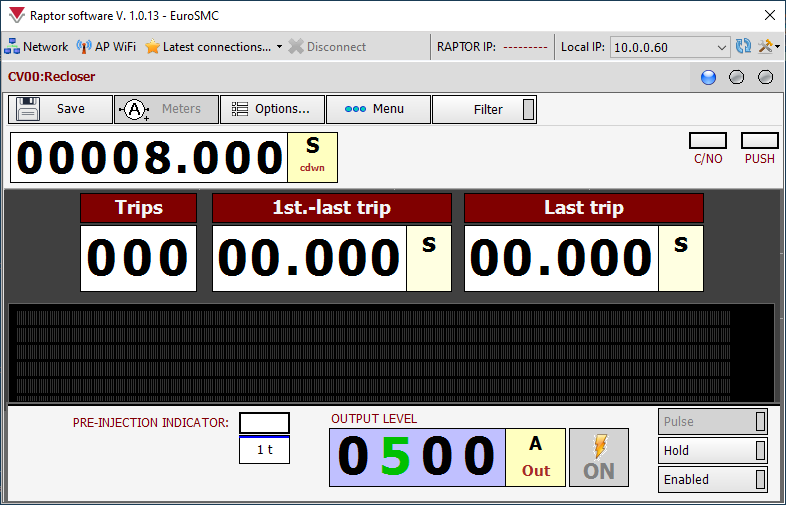
A high-current injection test simulates real-world fault conditions to validate the recloser’s ability to detect and respond accurately. New developments from EuroSMC can assure the proper evaluation and recloser testing with fast and easy presets and test guides.
5. Control and Communication Testing
For electronic and self-powered reclosers, testing involves verifying remote control functions, SCADA communication, and firmware integrity.
Self-Powered Reclosers: Unique Considerations
Self-powered reclosers operate independently by harnessing energy from the line current. Their distinctive features include:
No External Power Source Required: This makes them highly suitable for remote installations.
Lower Maintenance Needs: Without battery banks or external power supplies, maintenance costs and failure points are reduced.
Challenge in Low Load Conditions: Since they rely on line current, extremely low load conditions may impact their ability to function reliably.
Testing Challenges: Traditional recloser test methods may not be directly applicable. Special test setups, such as simulated load conditions, are often required to evaluate their performance accurately.
Reclosers are crucial for maintaining the reliability of power distribution networks. Their varied types, applications, and testing methods ensure that they operate efficiently and provide robust protection against faults. Self-powered reclosers offer significant advantages in remote areas but require specialized testing approaches. By understanding and implementing proper testing procedures, utilities and maintenance teams can ensure the longevity and effectiveness of recloser systems in diverse operating environments.

Comments